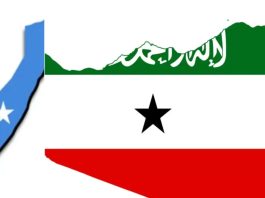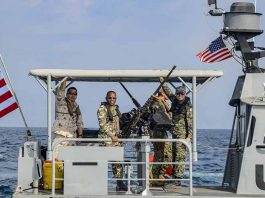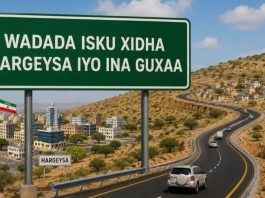

This article, “After Palestine, Should Australia Recognize Somaliland,” argues that Australia should recognize Somaliland as an independent nation, following its recognition of Palestine.
The author, Abdi Daud, presents several reasons for this:
-
Somaliland’s Unique Status: Somaliland isn’t a secessionist movement but a state restoring its sovereignty after a failed union with Somalia. It gained independence in 1960, briefly united with Somalia, but the union was rejected. After Somalia collapsed in 1991, Somaliland reasserted its independence and has been stable and democratic since.
-
Strategic Importance: Somaliland’s location in the Indian Ocean is strategically important. Recognizing it would counter Chinese expansion in the region, especially since Somaliland has rejected Chinese overtures and partnered with DP World (a competitor to China’s Belt and Road Initiative).
-
Alignment with US Interests: Unlike the recognition of Palestine, recognizing Somaliland aligns with US strategic interests.
-
Benefits for Somaliland-Australians: Recognition would ease travel restrictions and allow Somalilanders to engage with their heritage as citizens of a functioning democracy.
-
Somaliland’s Credentials: Somaliland fulfills the criteria for statehood, with a functional government, currency, borders, military, and democratic system.
The author concludes that recognizing Somaliland would support a democratic partner, counter Chinese influence, and demonstrate regional leadership. He also points out the practical benefits for Somaliland-Australians and highlights that the only barrier to recognition is an outdated perception of Somaliland’s legal status.
The complete piece is as follows:
 After Palestine, Should Australia Recognize Somaliland

By Abdi Daud
Australia should give serious consideration to recognize Somaliland, particularly following its recognition of Palestine in September 2025. In doing so, it would reinforce its strategic position in the Indo-Pacific, align with US interests, counter Chinese expansion, and address practical challenges facing Australian Somaliland communities.
The primary barrier to recognition has not been a lack of strategic interest but a persistent misconception about Somaliland’s legal status. Australian policymakers, like most of the international community, have tended to view Somaliland as a secessionist movement rather than what it actually is: a state restoring its sovereignty that it previously and legitimately held. This misframing has made recognition appear to set dangerous precedents for territorial integrity when the historical record demonstrates the opposite.
On 26 June 1960, British Somaliland gained independence and was internationally recognized as a sovereign state. Five days later, it entered into a voluntary but hastily arranged union with Italian Somaliland to form the Somali Republic. This attempted union proved disastrous.
A 1961 referendum rejected the union in Somaliland’s major cities and the African Union’s 2005 fact-finding mission later confirmed that the union never achieved legal validity.
In 1988, the Somali government perpetrated genocide against the Isaaq clan in Somaliland, killing an estimated 50,000 to 200,000 civilians. A 2001 UN report concluded that “the crime of genocide was conceived, planned and perpetrated by the Somalia Government against the Isaaq people.”
When Somalia collapsed in 1991, Somaliland reasserted its independence. For 35 years since, it has maintained stable democratic institutions, peaceful transfers of power, and comprehensive territorial control. It issues its own currency, manages its borders, maintains a military, and runs a functional democratic system, thereby meeting all four criteria of the Montevideo Convention.
This distinction matters. Recognizing a state that is restoring sovereignty after an invalid union is profoundly different from recognizing a separatist movement. The Baltic States provide the clearest precedent: nations recognized based on historical sovereignty and legal continuity after the Soviet Union’s collapse. Somaliland’s case aligns with this principle of state continuity, not with separatist movements that would destabilize existing borders.
Just as Australia’s recognition of Palestine did not require Israel’s approval, Somaliland recognition does not require Somalia’s consent. Somalia’s claim rests on a union that was rejected in 1961, followed by genocide against Somaliland people, followed by 35 years of Somaliland functioning as an independent state.
Strategically, Somaliland occupies one of the most important geographic positions in the western Indian Ocean. Since establishing relations with Taiwan in 2020, China has opposed Somaliland’s independence, providing military aid to Somalia to undermine Somaliland’s sovereignty. Somaliland has consistently rejected Beijing’s overtures.
In 2016, DP World secured a 30-year concession to develop Berbera Port, with Ethiopia holding a 19% stake. This represents a direct alternative to Chinese Belt and Road Initiative infrastructure. A 2023 World Bank report ranked Berbera as the most efficient port in Sub-Saharan Africa.
Australian recognition would bolster a democratic partner that has been Chinese influence, support infrastructure partnerships that compete with Belt and Road, and signal to Indo-Pacific nations that Australia backs those who choose democratic governance over Chinese inducements. Recognizing Somaliland would provide enhanced international legitimacy, strengthen its ability to attract investment outside Chinese control, and demonstrate regional leadership at a time when concrete actions matter.
The lack of recognition has tangible effects on Somaliland-Australians. They are required to obtain Somali visas when travelling to Somaliland, forcing them to engage with a government that perpetrated genocide against their people. They have been turned back at Australian airports because border systems do not distinguish between Somalia and Somaliland.
International recognition would enable Somaliland to access global banking systems, attract foreign investment, and engage in international trade agreements currently blocked by its unrecognized status. This would reduce the financial burden on diaspora communities who currently serve as their homeland’s lifeline through remittances. Recognition would enable young Somaliland-Australians to connect with their heritage as citizens of a functioning democracy similar to their new home country.
Australia’s recognition of Palestine in September 2025 demonstrated Canberra’s willingness to make principled recognition decisions. Yet Somaliland recognition differs crucially: it aligns Australian policy with US interests rather than diverges from them.
President Trump stated in August 2025 that his administration is “looking into” recognizing Somaliland, whilst Senator Cruz urged recognition. Unlike Palestine, where Australia acted despite American opposition, Somaliland recognition aligns Australian and American strategic interests.
The 2023 US National Defense Authorization Act calls for exploring closer cooperation with Somaliland, senior U.S. lawmakers have pushed for Somaliland to be treated separately from Somalia in official travel guidance, and Project 2025 recommends recognizing Somaliland, which shows Washington is clearly pivoting toward Somaliland as a distinct strategic partner in its broader effort to compete with China across Africa.
In World War 2, the Royal Australian Navy helped fight fascist occupation in Somaliland. Today we need to liberate this democracy from the diplomatic isolation imposed by a legal misconception.
A functioning state of 6 million people maintains stable governance, rejects Chinese pressure, partners with DP World to counter Belt and Road expansion, controls crucial Indian Ocean approaches, and meets every criterion for statehood. The only barrier is outdated framing that obscures shared values, strategic alignment, and economic opportunity. It is time to recognize Somaliland.
 Abdi Daud is a Melbourne-based technologist and Cultural Ambassador for the Association of Somaliland Community in Australia. He writes on the intersection of technology and geopolitics, with particular focus on Somaliland’s journey toward international recognition and Australia’s evolving foreign policy in the Indo-Pacific region.