This policy brief analyzes the foreign policy direction of Somaliland under its newly elected government, highlighting key priorities, challenges, and strategic shifts.
Despite its lack of international recognition, Somaliland continues to engage in proactive diplomacy, emphasizing regional partnerships, economic cooperation, and security collaborations.
The brief examines the government’s stance on international recognition, evolving relations with neighboring states, and economic diplomacy efforts, particularly through the development of the Berbera Port. It also explores challenges such as geopolitical competition, resource constraints, and regional tensions.
The brief concludes with policy recommendations aimed at strengthening Somaliland’s diplomatic engagement and economic positioning in the Horn of Africa and beyond.
The complete brief is as follows:
Policy Brief: Somaliland’s Foreign Policy under the New Government
Author: Rooble Mohamed Sahardid,
Editor-In-chief of Redsea Maritime Journal, Abaarso Tech University.
March 2025
Table of Contents |
Introduction
Somaliland, an independent state in the Horn of Africa – that has not yet been internationally recognized – has pursued a proactive foreign policy since its declaration of independence from Somalia in 1991. Despite lacking international recognition, Somaliland has maintained a stable government, democratic institutions, and a commitment to regional security. The election of the new government in November 2024 marked a significant shift in its foreign policy priorities, focusing on strengthening diplomatic ties and economic partnerships.

This policy brief provides a snapshot of Somaliland’s foreign policy under the new government, including key goals, achievements, and challenges.
International Recognition
Securing international recognition has been a cornerstone of Somaliland’s foreign policy, a goal consistently pursued by successive governments since restoring its independence in 1991. However, since taking office less than three months ago, the new government has yet to publicly disclose specific plans or strategies aimed at advancing this objective.
While Somaliland continues to emphasize its democratic governance, stability, and contributions to regional security as key arguments for recognition, its recent engagements with international partners, such as the United Arab Emirates (UAE), have primarily focused on economic cooperation rather than diplomatic recognition. On January 26th, 2025, a month after his election, the new president of Somaliland H.E Abdirahman Mohamed Abdillahi made his first international trip to the UAE.
To date, there has been no visible counteroffensive to Somalia’s intensified foreign policy efforts aimed at undermining Somaliland’s quest for recognition. While some observers suggest that discussions on recognition may be taking place behind closed doors, the absence of public initiatives, foreign policy sets, or statements from the new government has left this critical aspect of Somaliland’s foreign policy in a state of ambiguity. This lack of visible action raises questions about the new administration’s immediate priorities and its approach to addressing the persistent challenge of securing international legitimacy.
Despite this missing clarity, the new government recently launched a diplomatic institute under the Ministry of Foreign Affairs. This initiative aims to provide both short- and long-term solutions by training a new generation of diplomats and international relations professionals, equipping them with the skills needed to advance Somaliland’s foreign policy objectives. This might be considered an indirect engagement in strategies to advance the efforts for recognition.
Regional Ties
Strengthening regional ties has been a consistent pillar of Somaliland’s foreign policy since its inception, with a focus on fostering friendly and cooperative relations with neighboring countries such as Ethiopia, Djibouti, and Kenya, as well as with Gulf States like the United Arab Emirates (UAE). While relations with these partners have experienced fluctuations over the years, Somaliland has generally maintained a constructive and collaborative approach. The new government appears to be not yet clear about continuing this tradition and prioritizing regional engagement as part of its broader diplomatic strategy.
Ethiopia’s reliance on Berbera Port as a critical trade gateway has further solidified this partnership, making it a cornerstone of Somaliland’s regional strategy. Additionally, Ethiopia’s hosting of the African Union (AU) headquarters in Addis Ababa provides Somaliland with a unique opportunity to engage African leaders directly about its quest for international recognition. This strategic proximity to the AU has allowed Somaliland to advocate for its cause on the continental stage, even as it continues to face challenges in gaining formal recognition.

Ethiopia, in particular, has been a key strategic partner for Somaliland since 1991. The two share deep historical, economic, and political ties, with Ethiopia being one of the first countries to establish a diplomatic presence in Hargeisa.
This strategic proximity to the AU has allowed Somaliland to advocate for its cause on the continental stage, even as it continues to face challenges in gaining formal recognition.
In his first two months in office, the President has undertaken two state visits to the UAE, where discussions centered on enhancing economic and security cooperation.
In his first two months in office, the President has undertaken two state visits to the UAE, where discussions centered on enhancing economic and security cooperation. These visits have yielded tangible benefits, including the UAE’s facilitation of Somaliland’s participation in the World Governments Summit. This platform allowed Somaliland to engage directly with global leaders, investors, and policymakers, advancing its diplomatic and economic agenda on an international stage.
While anticipated state visits to Ethiopia and Djibouti have yet to materialize, relations with these key neighbors should remain cooperative and stable. Somaliland’s longstanding ties with Ethiopia, in particular, continue to be a cornerstone of its regional strategy, given Ethiopia’s strategic importance as a landlocked trading partner and political ally. Similarly, relations with Djibouti, despite occasional complexities, have to remain generally amicable.
Economic Diplomacy
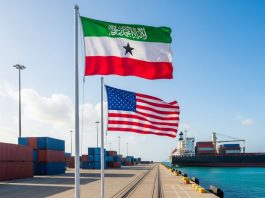
Recognizing the importance of economic development, the new government has prioritized attracting foreign investment as a central pillar of its foreign policy. Key sectors such as infrastructure, energy, and trade have been identified as critical areas for growth, with Somaliland leveraging its strategic location along the Red Sea and Gulf of Aden to position itself as a regional trade and logistics hub. The Port of Berbera, a flagship project developed in partnership with DP World, stands as a testament to Somaliland’s economic potential. With over $450 million invested in recent years, the port has undergone remarkable development, transforming into a modern facility capable of handling large-scale maritime trade.

During the President’s recent visits to the UAE and participation in the World Governments Summit, the Port of Berbera was prominently featured as a strategic asset and a potential gateway for landlocked countries such as Ethiopia and South Sudan. These discussions highlighted the port’s role in facilitating regional trade and economic integration, underscoring its importance not only to Somaliland but also to the broader Horn of Africa. By promoting Berbera as a key transit point, Somaliland aims to attract further investment and strengthen its economic partnerships with international stakeholders.
The new government’s focus on economic diplomacy reflects a clear understanding of the link between economic development and political legitimacy. Advancing projects like the Berbera Port and the Berbera Corridor, Somaliland is not only boosting its domestic economy but also enhancing its strategic value to regional and global partners. This approach aligns with the broader goal of positioning Somaliland as a stable, investment-friendly destination in a volatile region.
Enhancing Security Cooperation
Somaliland has consistently positioned itself as a key partner in combating terrorism, piracy, and illegal trafficking in the Horn of Africa, contributing to regional stability and security. The new government has continued this tradition by actively seeking to strengthen security ties with international actors, including the United States, UK, the European Union, and Gulf states. These efforts underscore Somaliland’s strategic importance as a stable and reliable ally in a volatile region.
Recent high-level visits by Somaliland’s Chief of Police to the United Kingdom and its Chief of Military to the United Arab Emirates (UAE) demonstrate the new government’s commitment to enhancing security cooperation with regional and international partners. These engagements have focused on capacity-building, intelligence sharing, and joint efforts to address transnational security threats. Notably, the United States has taken significant steps to deepen its military engagement with Somaliland, recognizing the strategic value of Berbera Airport as a critical military and logistical hub. The airport’s role as a key route for U.S. operations in the region highlights Somaliland’s growing importance in global security frameworks.
Somaliland not only bolsters its own security capabilities but also reinforces its position as a responsible and proactive actor in the fight against regional instability. The new government’s efforts to enhance security cooperation align with its broader foreign policy objectives, including attracting investment by showcasing its commitment to peace and stability.
Challenges
Despite its achievements, Somaliland’s foreign policy faces several challenges including the absence of formal recognition remains the most significant obstacle to Somaliland’s foreign policy ambitions. Despite its democratic governance, stability, and contributions to regional security, Somaliland’s lack of international recognition severely limits its ability to access international financial institutions, secure development funding, and fully participate in global diplomacy. While Somaliland has managed to gain visibility in several international forums through the support of friendly entities and strategic partnerships, its unrecognized status continues to hinder its ability to engage on equal footing with sovereign states.
Despite its achievements, Somaliland’s foreign policy faces several challenges
This challenge is particularly evident in its exclusion from key multilateral organizations such as the United Nations, the African Union, and the World Bank, which are critical for accessing financial resources and advocating for its interests on the global stage. Without formal recognition, Somaliland remains unable to fully leverage its strategic location, economic potential, and democratic achievements to attract the level of international support and investment it deserves.
The new government faces the daunting task of navigating these constraints while continuing to build informal diplomatic networks and partnerships. While progress has been made through creative diplomacy and engagement with sympathetic actors, the lack of formal recognition remains a persistent barrier to Somaliland’s aspirations for greater integration into the international community.
Regional tensions
Despite, the historical and legal differences between Somaliland and Somalia’s statehood, relations with Somalia remain a significant challenge for Somaliland, as Mogadishu continues to assert its claim over Somaliland’s territory. The situation has escalated significantly since Somaliland signed a Memorandum of Understanding (MoU) with Ethiopia in January 2024, which reportedly included provisions for mutual recognition and Ethiopian access to the Red Sea via Somaliland’s coastline.
The MoU triggered a fierce diplomatic offensive from Somalia, which has sought to rally regional and international support against the agreement. Egypt and several Arab states have joined Somalia in opposing the deal, further intensifying regional tensions.
The new government has not yet disclosed its intentions regarding the MoU

Despite the high stakes, the new government has not yet disclosed its intentions regarding the MoU, and anticipated state visits between Somaliland and Ethiopia have yet to materialize. This uncertainty has left regional dynamics in a state of flux, with all eyes on how Somaliland and Ethiopia will navigate their relationship moving forward. The new administration faces the delicate task of balancing its strategic interests with the need to manage escalating regional tensions, particularly as Somalia and its allies continue to exert pressure on the international stage.
Resource Constraints
Limited financial and human resources continue to hinder Somaliland’s ability to maintain an extensive diplomatic presence and implement large-scale development projects. As an unrecognized state, Somaliland’s access to international monetary institutions such as the World Bank and the International Monetary Fund (IMF) is either severely restricted or nonexistent. This leaves the government heavily reliant on domestically collected revenue, which is insufficient to meet its ambitious diplomatic and developmental goals. While Somaliland receives some conditioned assistance from the international community and friendly states, these contributions are limited and often fall short of addressing the country’s pressing needs.
Human resource capacity is a constraint. The lack of educational institutions capable of producing experts in diplomacy, international relations, and development has created a skills gap that undermines Somaliland’s ability to effectively engage with the international community. The recent diplomatic institute by the Ministry of Foreign Affairs will help Somaliland overcome some of these challenges and provide skilled human resources in its diplomatic engagement.
Despite these efforts, resource constraints remain a critical obstacle for the new government. Without access to substantial international funding or a robust pool of skilled personnel, Somaliland’s ability to sustain its diplomatic offensive and implement transformative development projects is severely limited.
The lack of educational institutions capable of producing experts in diplomacy, international relations, and development has created a skills gap that undermines Somaliland’s ability to effectively engage with the international community.
Geopolitical competition
The Horn of Africa’s strategic location, particularly its proximity to the Red Sea and Gulf of Aden, has made it a focal point of geopolitical competition among global and regional powers. This complex environment presents both opportunities and challenges for Somaliland as it seeks to advance its foreign policy objectives. Major players such as the United States, China, the European Union, Turkey, and Gulf states like the United Arab Emirates (UAE) and Saudi Arabia are actively engaged in the region, often pursuing competing interests in areas such as Maritime, trade, security, and infrastructure development.
For Somaliland, this geopolitical competition requires careful navigation. On one hand, the interest of global powers in the region provides opportunities for partnerships, investment, and diplomatic support. For instance, the UAE’s investment in the Port of Berbera and the United States’ use of Berbera Airport for military operations highlight Somaliland’s growing strategic value. On the other hand, the involvement of multiple actors with differing agendas complicates Somaliland’s efforts to maintain a balanced and independent foreign policy. For example, tensions between Ethiopia and Egypt over the Grand Ethiopian Renaissance Dam (GERD) have spilled over into Somaliland’s diplomatic space, particularly following the signing of the MoU with Ethiopia in January 2024.
 Additionally, Somaliland must contend with the influence of Somalia, which continues to assert its territorial claim over Somaliland and actively works to undermine its international engagements. The involvement of Arab states such as Egypt in supporting Somalia’s position further intensifies the geopolitical pressures facing Somaliland.
Conclusion
Somaliland’s foreign policy under the new government reflects that it has been shifted from its existing path. While progress has been made, challenges remain, particularly in securing international recognition and navigating regional tensions.
Recommendations
-
Intensify Diplomatic Efforts:
Somaliland should continue to engage with international partners, leveraging its democratic governance. Strategic location and stability to build a stronger case for recognition.
-
Enhance Regional Cooperation:
Strengthening and prioritizing ties with neighboring countries and regional organizations can help Somaliland gain broader support and mitigate tensions with Somalia.
-
Leverage Economic Opportunities:
The government should prioritize economic diplomacy, focusing on sectors that attract foreign investment and promote sustainable development.
-
Engage the Diaspora:
Continued engagement with the Somaliland diaspora can amplify advocacy efforts and contribute to national development.
-
Seek Multilateral Support:
Somaliland should explore avenues for greater engagement with multilateral institutions, even in the absence of formal recognition.
Bibliography
- Bradbury, M. (2008). Becoming Somaliland. London: Progressio.
- Walls, M. (2009). “The Emergence of a Somali State: Building Peace from Civil War in Somaliland.” African Affairs, 108(432), 371-389.
- International Crisis Group (ICG). (2006). “Somaliland: Time for African Union Leadership.” Africa Report No. 110.
- World Bank. (2015). Economic Impacts of the Berbera Corridor in Somaliland.
- Chatham House. (2011). “Somaliland’s Place in the World.”
- Somaliland Ministry of Foreign Affairs. (2025). Diplomatic Institute Launch Report.
- Al Jazeera. (2024). “Why is Somalia so angry about Ethiopia’s new Red Sea port deal?”