Explore how misapplied OAU resolutions, international aid, and Somalia’s policies undermine Somaliland’s aviation sovereignty. This analysis examines treaty succession, ICAO standards, and human rights risks in the Horn of Africa.
This article discusses the complex situation surrounding Somaliland’s aviation sovereignty and its relationship with Somalia.
Here’s a concise explanation:
-
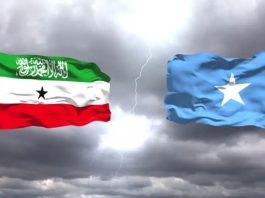
Somaliland’s Claim: Somaliland argues it has a distinct aviation identity, recognized by ICAO in 1947 and through treaties upon its brief independence in 1960. It asserts its union with Somalia was never legally finalized.
-
Somalia’s Position: Somalia, supported by a 1991 OAU resolution, considers Somaliland part of its territory. This resolution is criticized for lacking legal basis and being influenced by a former Somali Ambassador.
-
Consequences: This dispute leads to airspace management conflicts, mistreatment of Somaliland aviation workers, and travel restrictions imposed by Somalia on travelers to/from Somaliland.
-
International Aid Paradox: International aid to Somalia is seen as problematic because it enables Somalia to exert control over Somaliland, perpetuating injustices against those who suffered during the Barre regime.
-
Call for Review: The article urges the international community to re-evaluate the legal basis of the 1991 OAU resolution to address human rights concerns and ensure aviation safety.
The complete piece is as follows:
Somaliland’s Skies: International Aid, Misapplied Resolutions, and the Struggle for Aviation Sovereignty
By M. Amin
In September 2025, Somalia’s fragile federal government, sustained by AUSSOM peacekeeping forces and international funding, imposed e‑visa restrictions on travelers to and from Somaliland. The move treated Somaliland as part of the former Somali Republic, a status rooted not in law but in a political resolution passed by the Organization of African Unity (OAU) in 1991. That resolution, widely criticized as an “imposter,” has fueled decades of conflict over airspace management and continues to cast a shadow over aviation safety and human rights in the Horn of Africa.
The consequences of this misapplication are not abstract. In February 2024, a Somaliland‑originated air controller was extra-judicially killed in Mogadishu. Six of his colleagues were detained for six months, tortured, and falsely accused of involvement in the death. Turkish forensic investigators later proved their innocence, but the ordeal underscored the dangers faced by Somaliland aviation professionals working under Somalia’s authority. Since the imposition of e‑visa restrictions in 2025, travel movements to and from Somaliland have been mired in confusion and uncertainty, undermining the International Civil Aviation Organization’s (ICAO) own standards of facilitation and safety.
A History Written in ICAO’s Records
Somaliland’s aviation identity is not a recent invention. In 1947, ICAO catalogued Somaliland’s aviation laws in its landmark Document 4066, presented at the Organization’s First Assembly. This recognition placed Somaliland’s aviation regime alongside other states and protectorates, affirming its distinct legal presence in international aviation.
When Somaliland gained independence on June 26, 1960, it signed treaties with the United Kingdom, registered at the United Nations under Article 102 of the UN Charter. One of those treaties stated:
“Exchange of Letters providing that, should the Government of Somaliland be a party to any agreement transferring jurisdiction over the territory of Somaliland to any other Government, such agreement should provide that the obligations of the Government of Somaliland in respect of certain specified instruments…” Treaties between the UK and the State of Somaliland, June 26, 1960 (Cmnd. 1101)
These treaties confirmed Somaliland’s sovereignty and succession rights — including aviation obligations under ICAO. Four days later, a rushed “union” with Italian Somalia was proclaimed, but never ratified by both parliaments. As the UN International Law Commission noted in its 1962 Yearbook:
“Somalia became independent on 1 July 1960… An exchange of letters with Italy or with the United Kingdom on succession to treaty rights and obligations has not yet been registered with the Secretariat, but has recently come to its knowledge, and is reproduced in the annex, No. 11.” UN ILC Yearbook 1962, Vol. II
This record confirms that treaty succession was treated separately for British Somaliland and Italian Somalia, and that Somaliland’s union was never legally consummated.
The OAU’s Political Misstep
In 1991, as Somalia collapsed, the OAU passed Resolution CM/Res.1340 (LIV), reaffirming the territorial integrity of the Somali Republic. Unlike the Treaty of Friendship between Italy and the Somali Republic — which applied only to former Italian Somalia — the OAU resolution had no genuine legal basis.
The friendship treaty itself opens with:
“There shall be inviolable peace and perpetual and sincere friendship between the Somali Republic and the Italian Republic.” Italy–Somalia Treaty of Friendship, 1960
Behind the resolution was Abdullahi Said Osman, Somalia’s Ambassador to the UN under Barre’s regime, who had just been elevated to Assistant Secretary General of the OAU. From this post, he influenced the Secretariat to misapply Somali Republic sovereignty over Somaliland. That misapplication was later echoed by the UN, Arab League, and OIC, cementing a narrative that ignored Somaliland’s separate treaty succession.
Consequences in the Skies
The fallout is most visible in aviation. Agreements to manage airspace from Hargeisa, brokered in 2012, were unilaterally transferred to Mogadishu. In 2024, Somaliland aviation workers in Mogadishu were targeted — one killed, six detained. In 2025, Somalia imposed e‑visa restrictions on Somaliland travelers, raising questions about legality and data security.
ICAO’s own standards demand clarity of responsibility (Annex 11 on Air Traffic Services), safety oversight (Annex 19 on Safety Management), and fair facilitation (Annex 9 on border measures). By ignoring Somaliland’s documented aviation identity, ICAO risks compromising safety in one of the world’s most sensitive corridors.
The Contrast: Aid and Impunity
Without AUSSOM peacekeeping and international funding, Somalia’s federal government has no capacity to impose restrictions on Somaliland. Since 1991, when Somaliland was liberated and reinstated its own government, Mogadishu has relied almost entirely on external support to survive. Yet that same support has enabled Somalia to impose policies that echo the practices of Barre’s genocidal regime — policies that continue to harm the very victims who survived the Isaaq genocide of the 1980s.
The contrast is stark: international aid sustains a government that cannot stand on its own, while simultaneously empowering it to impose restrictions and violations on Somaliland. In effect, aid has become a tool that perpetuates injustice, allowing a weak government to enforce the legacy of a collapsed dictatorship against its victims.
A Call for Review
It is time for the international community to review the legal basis of the OAU’s 1991 resolution. Without such a review, all the support given to Mogadishu by the international community helps to violate the human rights of innocent victims and survivors of the Isaaq genocide.
Thirty‑five years after the collapse of Barre’s regime, it is a shame that international actors continue to work under its policies — against the very victims who endured them.