
Ethiopia has accused Egypt of obstructing its efforts to secure Red Sea access following a new maritime cooperation agreement between Egypt and Eritrea. The dispute adds pressure to regional tensions involving Somaliland, the GERD dam and Horn of Africa geopolitics
A fresh diplomatic dispute has erupted in the Horn of Africa after Ethiopia accused Egypt of attempting to block Addis Ababa’s long-standing ambition to secure direct access to the Red Sea, escalating regional tensions already fueled by disagreements over maritime influence, regional alliances and the Nile waters dispute.
The accusation came just days after Egypt and Eritrea signed new maritime cooperation agreements in the Eritrean capital, Asmara, strengthening ties between two governments that have increasingly aligned on regional security issues.
Speaking at a press conference on Thursday, Ethiopian Foreign Ministry spokesperson Nebiat Getachew accused Cairo of trying to “obstruct” Ethiopia’s efforts to obtain sea access. He emphasized that Addis Ababa would continue pursuing “a peaceful and sustainable path” toward securing maritime access.
The remarks underscore Ethiopia’s growing urgency to overcome its landlocked status, a condition it has faced since Eritrea’s independence in 1991 following decades of civil war.

Egypt and Eritrea Deepen Red Sea Cooperation
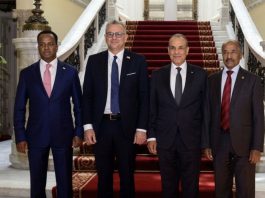
The latest friction follows high-level talks in Asmara attended by Eritrean President Isaias Afwerki, Egyptian Foreign Minister Badr Abdelatty and Transport Minister Kamel al-Wazir.
According to Egypt’s Foreign Ministry, the agreements included maritime transport cooperation and the establishment of a shipping line connecting Egyptian and Eritrean ports through the Red Sea corridor.
During the meetings, Abdelatty stressed that the “governance and security” of the Red Sea should remain the “exclusive responsibility” of countries bordering the strategic waterway.
“Non-littoral parties have no right to engage in arrangements related to the Red Sea,” Abdelatty said, in remarks widely interpreted as directed at Ethiopia.
The Red Sea has become increasingly central to regional geopolitics as global powers and regional states compete for influence over one of the world’s busiest shipping lanes, linking Europe, the Middle East and Asia.
Somaliland Deal Remains at Center of Regional Dispute
Ethiopia’s maritime ambitions gained international attention in 2024 when Addis Ababa signed a historic memorandum of understanding with Somaliland. The agreement proposed granting Ethiopia access to the strategic port city of Berbera in exchange for possible recognition of Somaliland’s independence.
The arrangement triggered a diplomatic crisis with Somalia, which considers Somaliland part of its sovereign territory and accused Ethiopia of violating its territorial integrity.
Although the deal generated widespread debate across the Horn of Africa, implementation has largely stalled amid international pressure and Turkish-mediated negotiations between Mogadishu and Addis Ababa. Ethiopia has not formally recognized Somaliland, and no finalized port-access agreement has been publicly announced.
Still, the Berbera initiative demonstrated Ethiopia’s determination to reduce dependence on foreign ports, particularly those in neighboring Djibouti, through which the vast majority of Ethiopian trade currently passes.
Nile Dam Dispute Continues to Shape Relations
The latest confrontation also reflects broader tensions between Egypt and Ethiopia that have simmered for more than a decade over the Grand Ethiopian Renaissance Dam, commonly known as the GERD.
Egypt argues the massive hydroelectric project on the Blue Nile threatens downstream water supplies that millions of Egyptians rely upon. The Nile provides more than 90% of Egypt’s freshwater needs, making the dispute a critical national security issue for Cairo.
Ethiopia, however, maintains that the dam is essential for economic development and electricity generation.
The disagreement has repeatedly strained diplomatic relations despite years of negotiations involving regional and international mediators.
Regional Alliances Intensify
In response to Ethiopia’s expanding regional influence, Egypt has strengthened partnerships with several Horn of Africa states, including Somalia, Sudan and Djibouti.
At the same time, Ethiopia has intensified its own diplomatic outreach.
This week, Ethiopian State Minister for Foreign Affairs Hadera Abera Admassu traveled to Qatar for meetings with Qatari Prime Minister and Foreign Minister Mohammed bin Abdulrahman bin Jassim Al Thani.
Meanwhile, Ethiopian Foreign Minister Gedion Timothewos recently met US Secretary of State Marco Rubio in Washington as Addis Ababa seeks to reinforce relations with the administration of President Donald Trump.
The diplomatic maneuvering comes amid reports that Washington is considering a recalibration of its relationship with Eritrea.
According to recent reports by The Wall Street Journal, the Trump administration is exploring the possibility of easing sanctions on Eritrea as growing instability linked to Iran-backed Houthi attacks in the Red Sea increases the strategic value of regional shipping routes and military access.
Eritrea controls approximately 750 miles of Red Sea coastline, including the strategically important port of Assab, positioning the country as a key player in evolving regional security calculations.
Horn of Africa Faces Increasing Geopolitical Pressure
Analysts say the intensifying rivalry between Egypt and Ethiopia reflects a broader geopolitical struggle unfolding across the Horn of Africa, where maritime access, energy security and international shipping routes have become increasingly interconnected.
For Ethiopia, securing reliable Red Sea access remains both an economic necessity and a strategic ambition. For Egypt, limiting Addis Ababa’s regional leverage — particularly amid the unresolved GERD dispute — has become a central foreign policy objective.
As regional alliances shift and global powers deepen involvement in the Red Sea corridor, the Horn of Africa is likely to remain a focal point of international competition in the months ahead.