A former Israeli general says Israel and the U.S. have a strategic footprint in Somaliland near the Bab el-Mandeb Strait to counter Houthi threats, signaling a potential shift in Red Sea security dynamics
TEL AVIV — A retired Israeli general has claimed that Israel, in coordination with the United States, has established an operational foothold in Somaliland to counter Yemen’s Houthi movement near the strategic Bab el-Mandeb Strait, underscoring what he described as a “game-changing” shift in regional security dynamics.
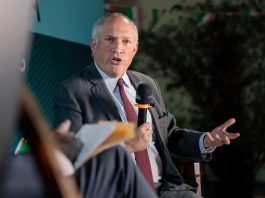
Amir Avivi, a former officer in the Israel Defense Forces and founder of the Israel Defense and Security Forum, said during a policy briefing that Israeli naval operations have significantly degraded Houthi capabilities by intercepting Iranian-supplied weapons shipments.

“The Houthis have been weakened dramatically,” Avivi said. “People are not aware, but the Israeli Navy has been operating in the area and has managed to prevent 80 percent of the capabilities that were sent from Iran to the Houthis.”
Avivi further asserted that Israel has developed operational infrastructure in Somaliland, describing it as a forward position directly across from Houthi-controlled territory in Yemen.
“We have a base now — a place where we can operate from, very, very close to the Houthis,” he said, adding that the broader presence of U.S. forces in the region enhances the effectiveness of these operations.
Neither Israel nor the United States has publicly confirmed the existence of a base or permanent military deployment in Somaliland. Security analysts caution that such claims remain unverified and may reflect strategic messaging as much as operational reality.
Still, Avivi framed the development as part of a wider transformation in global maritime security, arguing that Washington is extending influence across critical chokepoints, from the Strait of Hormuz to the Strait of Malacca and beyond.
“The U.S. is creating very effective control over almost every single strait on the globe,” he said. “This is good news for the United States and good news for Israel.”
Beyond the Red Sea, Avivi described mounting economic pressure on Iran, arguing that sanctions, inflation and disruptions to maritime leverage are eroding Tehran’s ability to sustain regional proxy networks, including Hezbollah, Hamas and the Houthis.
He characterized recent U.S. efforts to secure maritime routes — including mine-clearing operations in the Strait of Hormuz — as a “defining moment” that could strip Iran of strategic leverage over global energy flows.
Avivi also pointed to shifting energy infrastructure across the Middle East, including efforts by Gulf States to bypass vulnerable maritime routes and proposals to channel oil exports through Israeli territory to European markets. According to him, these developments could position Israel as a central transit corridor in future energy supply chains.
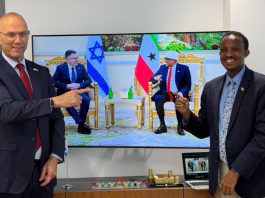
His remarks come amid deepening engagement between Israel and Somaliland. In December, Israel became the first United Nations member state to formally recognize Somaliland as an independent and sovereign state.

A senior Somaliland official told Israeli media outlet N12 this week that the territory is prepared to expand cooperation with Israel in response to potential Houthi threats to maritime security.
“If the Houthis disrupt maritime security in the region, it would be in the interest of both Somaliland and Israel to develop a mutual understanding and potentially a security pact against our shared adversary,” the official said.
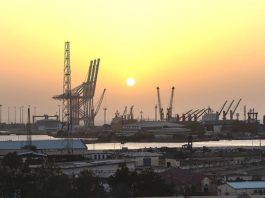
The official added that Somaliland is open to positioning itself as a security partner to allies including Israel, the United States and the United Arab Emirates, which maintains a presence at the strategic Berbera Port.
Diplomatic ties between Israel and Somaliland have advanced in parallel, with Israel appointing Michael Lotem as ambassador and Somaliland naming Dr. Mohamed Hagi as its envoy to Israel. A planned visit by Somaliland President Abdirahman Mohamed Abdullahi was postponed due to the ongoing war but is expected to play a key role in formalizing bilateral relations.
Despite the flurry of claims and diplomatic signals, analysts emphasize that the situation remains fluid, with significant gaps between public statements and confirmed policy.
Even so, Avivi’s remarks highlight the growing strategic importance of the Red Sea corridor — and Somaliland’s increasingly prominent position within it — as global powers compete to secure trade routes, counter regional threats and reshape the geopolitical map.