
Somalia’s search for a new patron is turning toward Saudi Arabia as Western support wanes, but Mogadishu’s Saudi bet may not replace the scale of Western financial and institutional backing
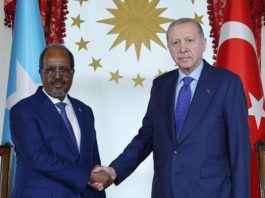
MOGADISHU, Somalia — As Western governments reassess their long-running financial and security commitments to Somalia, political forces in Mogadishu appear increasingly interested in Saudi Arabia as a potential alternative source of external backing.
The attraction is understandable: Riyadh possesses substantial financial resources and considerable political influence across the Red Sea and Horn of Africa. But the idea that Saudi Arabia could replace the Western governments and international institutions that have financed Somalia’s state-building, humanitarian and security programs for decades faces formidable economic and political constraints.
At the heart of the debate is a deeper question: Has Somalia become dependent not merely on foreign assistance, but on a political economy in which prolonged instability itself generates power and access to resources?
A political economy built around fragility
Since the collapse of Somalia’s central government in 1991, Mogadishu has witnessed the emergence of powerful networks linking politicians, businessmen, former warlords, intermediaries and other influential actors.
Critics have described parts of this ecosystem in deeply pejorative terms, accusing entrenched elites of treating state institutions and international assistance as sources of patronage. Such allegations should be distinguished from established findings of individual corruption cases, but the broader concern over weak institutions and limited accountability has been a recurring feature of international assessments of Somalia.
For decades, billions of dollars in international assistance have flowed into Somalia under programs designed to rebuild government institutions, combat terrorism, strengthen security forces and provide humanitarian relief.
The paradox is that the same international system designed to help stabilize Somalia can also create incentives for political actors who benefit from control over access to external resources.
When institutions remain weak, political connections can become more valuable than transparent systems. When security remains precarious, armed actors and security intermediaries retain influence. And when public finances depend heavily on donors, political competition can become intertwined with access to foreign funding.
The result is a difficult cycle: international money is intended to reduce fragility, yet fragility can also determine who controls the money.
Western patience is under pressure
That model is increasingly facing scrutiny.
After years of substantial spending, Western governments and international institutions have become more focused on questions of effectiveness, accountability, security-sector performance and the sustainability of Somalia’s institutions.
The political crisis adds another layer of uncertainty.
President Hassan Sheikh Mohamud’s government has faced persistent disputes with political opponents and regional administrations over constitutional reform, elections and the distribution of political authority. The question of presidential tenure has also become particularly contentious, with critics accusing the administration of attempting to extend its political lifespan beyond the limits they believe should apply.
The government rejects such characterizations and has defended its political and constitutional agenda as necessary to complete Somalia’s transition toward a stronger federal system and more durable institutions.
But the disputes have intensified concerns among some observers that political competition is consuming energy that should instead be directed toward institutional reform.
The Saudi calculation
Against this backdrop, Saudi Arabia has emerged as an increasingly important country in Mogadishu’s regional calculations.
Riyadh has long maintained relations with Somalia and has significant interests in the Red Sea, the Gulf of Aden and the wider Horn of Africa. Saudi policymakers also view developments along the western shore of the Red Sea through the lens of regional security, maritime trade and competition with rival powers.
But there is an important distinction between political influence and financial substitution.
Saudi Arabia may have the resources to provide targeted assistance, diplomatic backing or security cooperation. It could also support specific political constituencies or projects that align with its regional interests.
That does not mean Riyadh is prepared — or economically positioned — to assume the enormous financial burden carried by Western governments, the World Bank, the International Monetary Fund, the European Union and other international institutions over decades.
Saudi Arabia itself faces competing domestic development priorities and substantial regional commitments. Its foreign-policy calculations are also shaped by the security environment surrounding the Red Sea, Yemen and the wider Middle East.
For that reason, the notion of Saudi Arabia as a “never-drying udder” for Mogadishu is better understood as political rhetoric than as an economic strategy.
From one patron to another?
The more consequential question is what Somalia would do with any additional Saudi support.
If external assistance is channeled primarily through political networks, armed groups or patronage structures, it could reinforce the very incentives that have weakened institutional development.
That concern is particularly relevant to Somalia’s relations with Somaliland.
Mogadishu has consistently opposed Somaliland’s pursuit of international recognition and has sought regional and international support for Somalia’s territorial-integrity position. Saudi Arabia, like most Arab and Muslim-majority governments, has traditionally maintained diplomatic relations with Somalia’s federal government rather than recognizing Somaliland as an independent state.
Any Saudi assistance directed toward Somalia’s security or political objectives would therefore be closely watched in Hargeisa.
But equating Saudi support with financing armed conflict against Somaliland would require evidence. Claims that Riyadh would finance militias or military operations should not be presented as established policy without documentary or official confirmation.
The real problem is structural
The central challenge for Somalia is therefore larger than the search for a replacement donor.
For more than three decades, the country’s political economy has developed around a combination of weak institutions, insecurity, external assistance and elite competition for control over public resources.
Changing the external source of funding does not automatically change that system.
If Western assistance declines and is replaced by money from regional powers without corresponding improvements in transparency, taxation, public financial management, security-sector accountability and political institutions, Somalia could simply exchange one dependency for another.
The sustainable alternative would be a state capable of raising a greater share of its own revenues, providing basic security, enforcing transparent rules and directing public resources through accountable institutions rather than informal political networks.
That transition would also have implications for Somalia’s young population, which represents both the country’s greatest demographic asset and one of its most pressing political challenges.
The question is not whether Somalia can find another patron. It is whether it can eventually build a political economy that does not need one.
That distinction may determine whether the next chapter of Somalia’s state-building story produces stronger institutions — or merely a new financier for an old system.