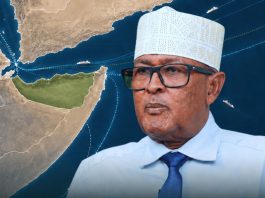

Somaliland community organizations across Canada have formally objected to a proposal designating July as “Somali Month,” urging Parliament to conduct broader consultations and adopt a more inclusive approach that recognizes diverse identities across the Horn of Africa
OTTAWA — A coalition of Somaliland diaspora organizations and community groups across Canada has formally urged Members of Parliament to reconsider a proposal that would designate July as “Somali Month,” arguing that the initiative risks overlooking the diversity of identities represented within communities originating from the Horn of Africa.
In a letter of protest dated June 12, 2026, the organizations expressed concern that the proposed designation may not adequately reflect the distinct cultural, national and historical identities of all communities affected by the initiative.
The letter was signed by the Nomad Heritage Institute, Somaliland Community in Ottawa, Somaliland Community in Toronto, Somaliland Community in Edmonton, Somaliland Community in Montreal, Somaliland Community in Vancouver, Somaliland Global Diaspora and Somaliland Global Congress.
Addressed to Canada’s House of Commons, the letter calls on lawmakers to delay or reconsider the proposal until broader consultations can be conducted among affected communities.
“While cultural recognition in a diverse country such as Canada is both valuable and welcomed, it is essential that such initiatives accurately reflect identity, history and diversity, and avoid unintended misrepresentation or exclusion,” the organizations wrote.
Concerns Over Representation
At the center of the groups’ objection is the use of the term “Somali” as a broad umbrella designation.
The organizations argue that the terminology may not adequately capture the diversity of communities whose origins trace back to the Horn of Africa.
“The use of the term ‘Somali’ in this context raises concerns about whether it appropriately reflects the full diversity of communities originating from the Horn of Africa,” the letter states.
The signatories emphasized the distinction between ethnic identity and national or political identity, arguing that public recognition initiatives should take both into account.
“It is important to distinguish between ethnic identity (‘Somali’) and national or political identity, including Somaliland and other distinct identities,” the letter says.
The organizations warned that failing to acknowledge such distinctions could inadvertently marginalize communities that do not identify exclusively within a single national framework.
“Failing to do so may unintentionally overlook communities that do not identify solely under a single national framework,” the letter adds.
 Questions Over Consultation

The coalition also raised concerns about the sponsorship and development of the proposed initiative.
While not naming specific lawmakers, the groups noted that one parliamentarian associated with the proposal originates from the region but may not necessarily represent the full range of perspectives within the wider community.
“In democratic multicultural policymaking, representation should be inclusive and balanced,” the organizations wrote.
The letter argues that cultural recognition efforts should not be perceived as advancing only one narrative or viewpoint.
“Initiatives should not be perceived as reflecting only one perspective or narrative,” the signatories said.
Call for Broader Engagement
The groups urged Parliament to undertake wider consultations before advancing any official designation.
According to the letter, lawmakers should engage with diaspora organizations, cultural associations and representatives of diverse communities from across the Horn of Africa.
The coalition said such an approach would help ensure that any future recognition promotes social cohesion and reflects Canada’s multicultural values.
“This will ensure that any recognition promotes unity rather than division and reflects Canada’s commitment to inclusivity and accuracy,” the letter states.
Alternative Framework Proposed
Rather than rejecting cultural recognition altogether, the organizations recommended exploring alternative approaches that would be more inclusive of the region’s diverse identities.
Among the suggestions outlined in the letter are broader heritage recognition initiatives or terminology that better reflects multiple cultural and national identities.
“In light of the above, we respectfully recommend that Parliament delay or reconsider the proposal in its current form,” the organizations wrote.
They further encouraged lawmakers to explore “a broader cultural heritage recognition or language that better reflects diverse identities.”
Appeal to Canadian Values
Concluding their appeal, the organizations framed their concerns within Canada’s longstanding commitment to multiculturalism and inclusive public policy.
“Canada’s strength lies in its thoughtful and respectful recognition of its diverse communities,” the letter states.
The signatories added that official designations should be grounded in “accuracy, inclusiveness and broad community support.”
“We trust that Members of Parliament will carefully consider these concerns in the spirit of fairness and respectful dialogue,” the organizations concluded.
The proposal has become the latest focal point in broader discussions about identity, representation and multicultural recognition among diaspora communities in Canada, where populations from across the Horn of Africa have grown significantly over recent decades.