
Pakistan-Somalia defense pact raises questions over whether Islamabad is pursuing military training and counterterrorism cooperation or a larger strategic presence near the Red Sea
By Analytica Team
Pakistan and Somalia have signed their broadest defense agreement in more than three decades, bringing senior army, navy and air force commanders into direct talks and reopening a military relationship whose modern history has been shaped by the violence and instability that followed Somalia’s state collapse.
The agreement has also generated speculation about Pakistan’s strategic ambitions in the Horn of Africa.
So far, however, the public record points toward a more limited — though still consequential — partnership.
Officials and reporting on the agreement have emphasized military training, counterterrorism cooperation, professional exchanges and defense capacity-building. No Pakistani combat troop deployment to Somalia has been announced. Nor has either government publicly confirmed plans for a Pakistani military base, permanent naval facility or combat deployment.
That distinction matters.
It separates a partnership centered on military academies, training programs and institutional cooperation from one involving foreign troops on Somali soil.
For now, the evidence supports the former.
But the agreement arrives at a moment when Somalia’s strategic coastline is attracting increasing attention from regional and international powers. The waters linking the Red Sea, the Gulf of Aden and the Indian Ocean have become a focal point for military competition, commercial rivalry and concerns over maritime security.
The larger question is therefore difficult to ignore:
Is Pakistan simply helping Somalia rebuild its armed forces, or is Islamabad beginning to establish a new strategic frontier near one of the world’s most contested maritime corridors?
 A New Defense Framework

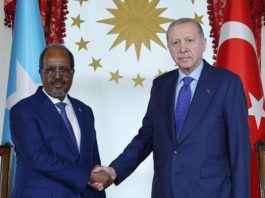
The current phase of Pakistan-Somalia military cooperation formally began on Aug. 4, when Somalia’s defense minister, Ahmed Moallim Fiqi, and Pakistan’s defense minister, Khawaja Muhammad Asif, signed a Memorandum of Understanding in Islamabad.
Somalia’s Ministry of Defense said the agreement covers counterterrorism cooperation, military training programs, the exchange of defense expertise and broader capacity-building initiatives between the two countries’ armed forces.
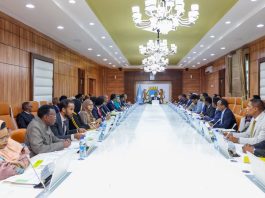
The signing was followed by an unusually high-level series of meetings.
Two days later, Fiqi led a Somali defense delegation to Pakistan’s General Headquarters in Rawalpindi. The delegation included Rear Adm. Abdiwahab Abdullahi Omar, commander of the Somali Navy and Coast Guard.
They met with Field Marshal Syed Asim Munir, Pakistan’s chief of army staff and chief of defense forces.
According to reporting citing Pakistan’s Inter-Services Public Relations directorate, the discussions focused on “evolving regional security dynamics and measures to further enhance bilateral defense and security cooperation.”
The Somali delegation also met separately with Pakistan’s naval and air force leadership.
Those discussions focused on maritime security, professional collaboration and military capacity-building.
Air Chief Marshal Zaheer Ahmed Baber Sidhu highlighted Pakistan’s training infrastructure and indigenous defense capabilities, while reaffirming Islamabad’s willingness to support institutional cooperation with the Somali Air Force.
The sequence of meetings suggested that the agreement is intended to involve all three branches of Somalia’s armed forces.
No Troops, No Base — At Least for Now
Despite speculation surrounding the agreement, no evidence has emerged that Pakistan plans to deploy combat forces to Somalia.
Multiple reports examining the publicly available details have reached the same conclusion: the Memorandum of Understanding does not authorize a Pakistani troop presence, establish a military base or provide Pakistan with formal access to Somali ports.
Defense Security Asia, which examined the agreement, noted that the memorandum “does not publicly confirm Pakistani deployments, permanent facilities, weapons transfers or basing access.”
The publication cautioned that claims of an immediate strategic realignment remain premature.
That assessment is important because the language surrounding military cooperation in the Horn of Africa can quickly become inflated.
Training agreements can evolve into deeper security partnerships. Naval cooperation can eventually lead to port access. Defense sales can create long-term maintenance and advisory relationships.
But none of those developments should be assumed before they are formally announced.
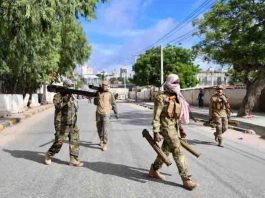
In the near term, the most likely form of cooperation appears to be Somali officers traveling to Pakistan for professional training.
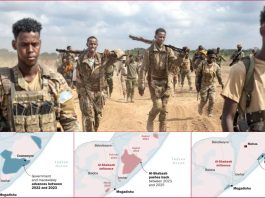
Pakistan could provide instruction in counterterrorism, intelligence analysis, logistics, communications and specialized military operations, while Somalia contributes local knowledge and operational experience from its long campaign against Al-Shabaab.
Such a partnership would fit within Pakistan’s established role as a provider of military training to foreign forces.
It would also address some of Somalia’s most immediate security weaknesses.
Why Somalia Matters Strategically
Even if the agreement remains focused on training, its geographic context gives it broader significance.
Somalia sits along one of the world’s most strategically important maritime zones, linking the Indian Ocean with the Gulf of Aden, the Red Sea and the Bab el-Mandeb Strait.
The corridor is essential to global trade and energy flows.
The Bab el-Mandeb has become increasingly vulnerable in recent years as Houthi attacks against commercial shipping and regional maritime targets disrupted traffic through the Red Sea.
Those attacks forced shipping companies to reconsider routes and heightened concern among governments dependent on uninterrupted navigation.
For Pakistan and Somalia, maritime security cooperation therefore carries obvious strategic value.
But analysts caution against automatically interpreting the defense pact as a Pakistani plan to establish control or influence over the Bab el-Mandeb.
That would go beyond what the current agreement publicly states.
The more immediate explanation may be simpler: Somalia needs assistance rebuilding its military institutions, while Pakistan sees an opportunity to expand defense diplomacy in a strategically important region.
 The Saudi-Led Maritime Security Factor

The timing of the agreement has nevertheless attracted attention.
Pakistan and Somalia have joined broader Saudi-backed efforts focused on maritime security around the Red Sea and Bab el-Mandeb, bringing their defense cooperation into a wider regional security environment.
The urgency has been reinforced by attacks on commercial vessels and the growing risk that conflict in the Middle East could disrupt one of the world’s most important maritime corridors.
For Saudi Arabia, maritime security has become increasingly linked to the protection of its ports, energy infrastructure and commercial routes.
For Somalia, instability in the Gulf of Aden affects a coastline that the federal government has struggled to fully secure.
For Pakistan, participation provides an opportunity to expand its role beyond South Asia and the Persian Gulf.
The convergence of these interests does not necessarily mean that a permanent Pakistani military presence in Somalia is imminent.
It does, however, place Islamabad inside a growing network of security relationships focused on the Red Sea.
Pakistan’s Expanding Defense Role in Africa
The Somalia agreement also fits into a broader expansion of Pakistan’s defense diplomacy.
Islamabad has sought to deepen military relationships across Africa and the Middle East, including discussions involving arms exports, training programs and strategic partnerships.
Pakistan’s defense industry has increasingly promoted the JF-17 Thunder fighter jet and other military systems to international customers.
Reports in recent months have linked Pakistan to potential major defense agreements with countries in North and East Africa, though several proposed deals remain unconfirmed or subject to political negotiations.
Pakistan has also strengthened its strategic relationship with Saudi Arabia, including a mutual defense arrangement that underscored the depth of security cooperation between the two countries.
Pakistani military personnel and defense assets have long maintained connections with Saudi security structures.
The Somalia agreement should therefore be viewed within a wider effort by Islamabad to position itself as a more active defense partner beyond South Asia.
That expansion is driven by several factors: defense exports, diplomatic influence, military training and participation in regional security initiatives.
Somalia could become another important node in that network.
The JF-17 Question
One of the most closely watched aspects of the Pakistan-Somalia relationship involves reports that Mogadishu may be considering the purchase of JF-17 Thunder Block III fighter jets.
Some reports have suggested that Somalia could seek as many as 24 aircraft in a deal valued at roughly $900 million.
Neither government has publicly confirmed a contract.
The Memorandum of Understanding itself does not specify any fighter-jet purchase or major arms transaction.
Until a formal agreement is announced, the reported acquisition remains speculative.
Still, the possibility is strategically significant.
Somalia’s air force was severely weakened during decades of conflict, institutional collapse and international arms restrictions. The lifting of the U.N. arms embargo in December 2023 opened the possibility for Mogadishu to rebuild conventional military capabilities.
A modern fighter fleet would represent one of the most ambitious defense modernization projects undertaken by Somalia in decades.
But purchasing aircraft would only be the beginning.
Military analysts point out that an effective combat aviation capability requires far more than fighter jets.
It would also require trained pilots and ground crews, radar coverage, secure communications, maintenance facilities, weapons stocks, fuel infrastructure and protected air bases capable of supporting sustained operations.
The long-term cost of operating a fighter fleet could also compete with other urgent defense priorities.
Somalia’s military remains heavily engaged in counterinsurgency operations against Al-Shabaab, where intelligence, helicopters, surveillance systems, mobility and ground-force support may provide more immediate value.
The question, therefore, is not simply whether Somalia could buy advanced aircraft.
It is whether such a capability would be affordable, sustainable and aligned with the country’s most pressing security needs.
Training Partnership or Strategic Foothold?
The Pakistan-Somalia defense agreement represents a significant development even without troop deployments or military bases.
Somalia is seeking to rebuild national security institutions after decades of conflict and fragmentation.
Pakistan possesses an established military training infrastructure, experience in counterterrorism and an increasingly active defense-export sector.
Those interests naturally overlap.
A successful training partnership could strengthen Somalia’s professional military capacity and improve cooperation in intelligence, maritime security and counterterrorism.
But strategic relationships often evolve.
What begins with officer exchanges can develop into weapons sales. Weapons sales can create advisory missions. Maritime cooperation can eventually produce logistical arrangements.
That does not mean such an evolution is inevitable.
It means the implementation of the agreement will matter more than the language of the initial memorandum.
A Crowded Horn of Africa
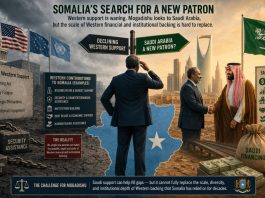
Pakistan is entering a region where military partnerships are already deeply contested.
Turkey maintains a major military presence in Somalia and operates Camp TURKSOM in Mogadishu, where it trains Somali security forces.
The United Arab Emirates has invested heavily in ports and logistics infrastructure across the Horn, including Berbera in Somaliland.
Egypt has expanded security ties with Somalia and Eritrea.
Saudi Arabia is pursuing a greater role in Red Sea security.
Israel’s recognition of Somaliland has added another geopolitical dimension to competition around the Gulf of Aden.
China maintains its first overseas military base in Djibouti, alongside other foreign military installations.
The Horn of Africa has therefore become one of the most crowded strategic environments in the world.
Any new defense relationship is likely to be interpreted through the broader competition for influence.
Pakistan’s agreement with Somalia will be no exception.
The Real Test Comes Next
For now, the Pakistan-Somalia defense pact appears to be what officials say it is: a framework for training, counterterrorism cooperation and military capacity-building.
There is no publicly confirmed Pakistani combat deployment.
There is no announced military base.
There is no confirmed Pakistani naval facility.
And there is no publicly verified contract for Somalia to purchase JF-17 fighter jets.
But the strategic significance of the agreement should not be dismissed simply because those more dramatic developments have not occurred.
Pakistan is expanding its defense diplomacy. Somalia is rebuilding its armed forces. The Red Sea and Gulf of Aden are becoming increasingly militarized and politically contested.
Those trends create conditions in which a limited training partnership could eventually become something more substantial.
The answer to the central question — whether Pakistan is helping Somalia rebuild its military or establishing a new strategic frontier — remains unresolved.
At present, the evidence points toward capacity-building.
The longer-term direction will depend on what follows: the scale of military training, the possibility of arms sales, the evolution of maritime cooperation and Pakistan’s role in broader Red Sea security initiatives.
If the partnership remains focused on institutional development, it could strengthen Somalia’s fragile security apparatus and contribute to regional stability.
If it expands into permanent military infrastructure or strategic basing, however, Pakistan would become another major external actor competing for influence in the Horn of Africa.
That distinction may ultimately determine whether the agreement is remembered as a training partnership — or the beginning of a much larger geopolitical shift.